
Currently Empty: $0
More CoursesPostpartum Anxiety vs. Baby Blues: Understanding Your Emotions After Birth

Feeling more anxious than happy after birth? Learn the difference between baby blues and postpartum anxiety, why sleep anxiety happens, and how to find peace.
You spent months getting ready for this. The hospital bag was packed with clothes for your baby, the nursery was painted a nice color, and you probably read every book about what to expect when having a baby. Now that your baby is finally here, you are realizing that nobody really got you ready for how you would feel.
Instead of feeling happy, as people often say you should on Instagram, you might feel like you are really worried all the time. Maybe you are crying because your tea got cold, or maybe you are staring at your baby’s bed at 3:00 AM, feeling scared, wondering if your baby is breathing even though you just checked a second ago.
If you are feeling really worried or really happy, I want you to take a deep breath. You aren’t doing anything wrong, and you aren’t a “bad” mother. What you’re experiencing is a massive physiological and emotional shift. Today, let’s peel back the layers on the “Baby Blues” versus something deeper, like postpartum anxiety, and talk about how to find your way back to yourself.
The "Expected" Happiness vs. Your Reality
In our society, people often expect a lot from mothers. We have a lot of family members, like aunts and cousins, and older people who tell us how lucky we are to have a baby.
Even though we really love our baby, sometimes that love is hidden behind a lot of worry.
Becoming a mother is a big change for a woman. One day you are just yourself, and the next day you are a mom. When you have to deal with no sleep, getting better from childbirth, and taking care of a baby, it is normal to feel really overwhelmed and confused. The transition to motherhood is a deal, and it can be hard to adjust to being a mom. Motherhood is a part of your life now, and it can be tough to balance everything.

What exactly are the "Baby Blues"?
If you’ve felt really emotional during the week or two after having your baby, you’re probably experiencing the “Baby Blues.” This is actually really common for new moms, affecting up to 80% of women.
Think of it like a sudden low. After giving birth, your estrogen and progesterone levels drop fast. This sudden change can make you feel:
- Mood swings: Happy one minute, sobbing the next.
- Irritability: Feeling "snappy" with your partner or family members.
- Feeling overwhelmed: The simplest tasks, like taking a shower, feel like climbing Mount Everest.
- Anxiety: A general sense of "can I really do this?"
The “Baby Blues” usually start around day three or four and they go away by the time your baby is two weeks old.
It’s like a storm which is uncomfortable and scary, but eventually it will pass.
When It’s More Than Just "The Blues": Signs of Postpartum Anxiety
Now most of us might wonder: But what if that storm doesn’t pass? What if the worry starts to consume the entire day?
This is where we look at postpartum anxiety. While postpartum depression gets a lot of the spotlight, Postpartum anxiety is incredibly common and often goes undiagnosed because we mistake it for “just being a concerned new mom.”
According to a study published in the Journal of Affective Disorders, anxiety disorders are actually more prevalent than depression in the postpartum period, yet they are frequently overlooked (Fairbrother et al., 2016).
Here are the signs that what you’re feeling might be Postpartum anxiety:
1. Constant, Circular Worry
It’s normal to worry about your baby. It’s not normal to have “what if” scenarios playing on a loop in your head all day. What if I drop the baby? What if someone gets sick? What if I’m not feeding them enough? These thoughts feel impossible to shut off.
2. Physical Symptoms of Panic
Anxiety is not just in your head; it’s in your body. You might feel a tightness in your chest, your palms might sweat, or you might feel a constant sense of “dread” in the pit of your stomach.
3. Sleep Anxiety
This is one of the parts of being anxious about your baby. Even when your baby is asleep, you can’t sleep. You’re lying there listening for every sound. You’re tired,d which makes you more anxious, and that makes it harder to sleep.
4. Intrusive Thoughts
These are pictures that play in your mind about something bad happening to your baby. Many moms are too scared to talk about them. Having a thought about something bad happening doesn’t mean you want it to happen. It’s just your brain trying to protect your baby. It gets out of control. These thoughts are about your baby. They keep coming back.
(A soft-focus image of a South Asian woman lying in bed in a dimly lit room, looking exhausted and staring at the baby monitor with a concerned expression.)
Why Is This Happening to Me?
In my clinical experience, I have come across many mothers in their postpartum phase who say: “I don’t feel like myself anymore. I don’t know who I am anymore”.
When that happens it’s easy to blame yourself, but anxiety isn’t a character flaw.
If you have felt this too, you must read our blog called Why Don’t I Feel Like Myself After Childbirth?
Now let’s understand why Postpartum Anxiety happens:
- The Hormonal Shift: As mentioned, your hormones are doing a massive "re-set" after birth. For some women, the brain is more sensitive to these drops, triggering anxiety.
- Extreme Sleep Deprivation: Sleep is the fuel our brain uses to regulate emotions. When you aren't sleeping, your "threat detector" (the amygdala) becomes hyper-reactive. This is often where we see the first signs of burnout.
- The Pressure of Perfectionism: Especially in our community, there’s an unspoken rule that we should be able to "do it all" with a smile. Trying to meet these impossible standards is a fast track to anxiety.
- Lack of Support: Women are supposed to raise their babies with the help of their community. If you are at home alone with your baby while your partner is at work, or if you do not feel like you have people to support you,u you will feel very stressed. Anxiety is a problem that happens when we do not have support from the people around us, and this is especially true for women who are trying to take care of their babies by themselves.
The Connection Between Burnout and Anxiety
When talking about burnout signs in motherhood, we usually think of feeling tired. Burnout goes deeper. It’s when you feel emotionally, physically,y and mentally drained because of too much stress that lasts a long time.
Studies have found that there’s a connection between burnout in parents and anxiety/depression (Mikolajczak et al., 2018). When you’re burnt out, you can’t handle things well. Everything seems like a problem. If you’ve lost your happiness and are just getting by, you’re probably dealing with both burnout and anxiety. Burnout and anxiety are closely related. Understanding burnout helps in dealing with anxiety.
How to Start Feeling Like "You" Again
The good news? You don’t have to live like this. Postpartum anxiety is highly treatable.
1. Lower the Bar
You need to heal, feed the bab,y and feed yourself. The laundry and social media updates can wait. It is okay to not do everything at once. You have permission to take it easy and focus on getting better.
2. Radical Honesty
Tell someone you trust how you’re really feeling. Whether it’s your partner, a sister, or a friend. Just say it: “I am struggling. I feel really overwhelmed with postpartum anxiety.”
3. Professional Support
There is no medal for suffering in silence. Speaking to a therapist who specializes in maternal mental health or talking to your doctor about your symptoms is a sign of strength, not weakness.

Taking the Next Step: The Postpartum Reset
I know that now, even thinking about getting help can feel like another task on your list. That’s why I created something for moms who are really struggling. If you’re having trouble sleeping, feeling anxious, or just want to feel like yourself, our Postpartum Reset Course is designed to be your gentle guide. No fluff, no “perfect mom” pressure: just real tools to help you regulate your nervous system and find your calm again.
You’ve spent so much time taking care of everyone else. It’s time to take care of you.
References
- Fairbrother, N., Janssen, P., Antony, M. M., Tucker, E., & Young, A. H. (2016). Perinatal anxiety disorder prevalence and incidence. Journal of Affective Disorders, 200, 148-155.
- Mikolajczak, M., Brianda, M. E., Avalosse, H., & Roskam, I. (2018). Consequences of parental burnout: Its specific effect on child neglect and violence. Child Abuse & Neglect, 80, 134-145.
Other Blogs
 May 7, 2026
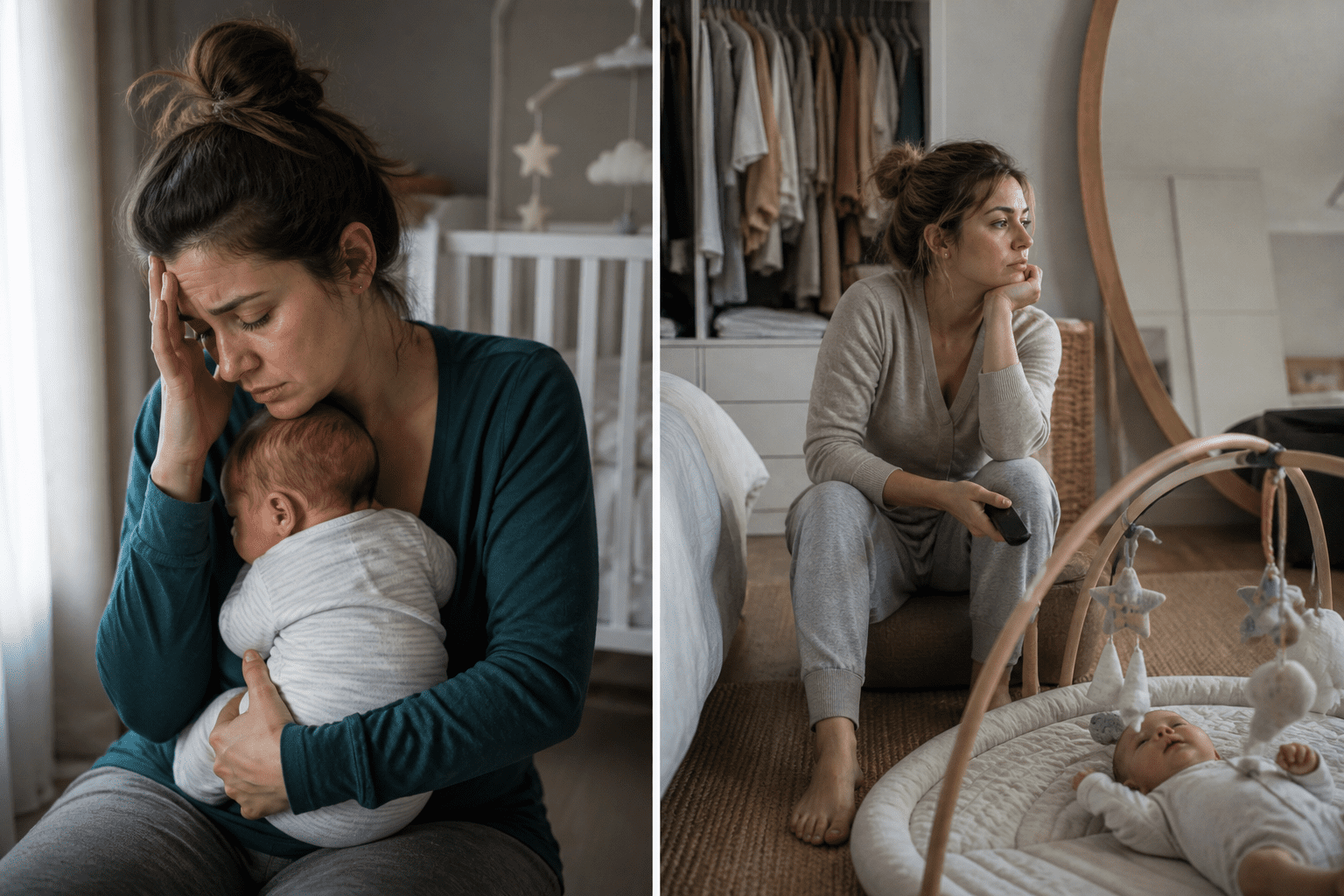
Why Don’t I Feel Like Myself After Childbirth?
If you feel like you’re losing yourself after having a baby, you’re not broken. A supportive, real-talk guide to matr...
Read More May 7, 2026
Is Productivity Culture Increasing My Stress as a Mom?
Feeling overwhelmed by the pressure to do it all? Learn how hustle culture affects working mothers and discover pract...
Read More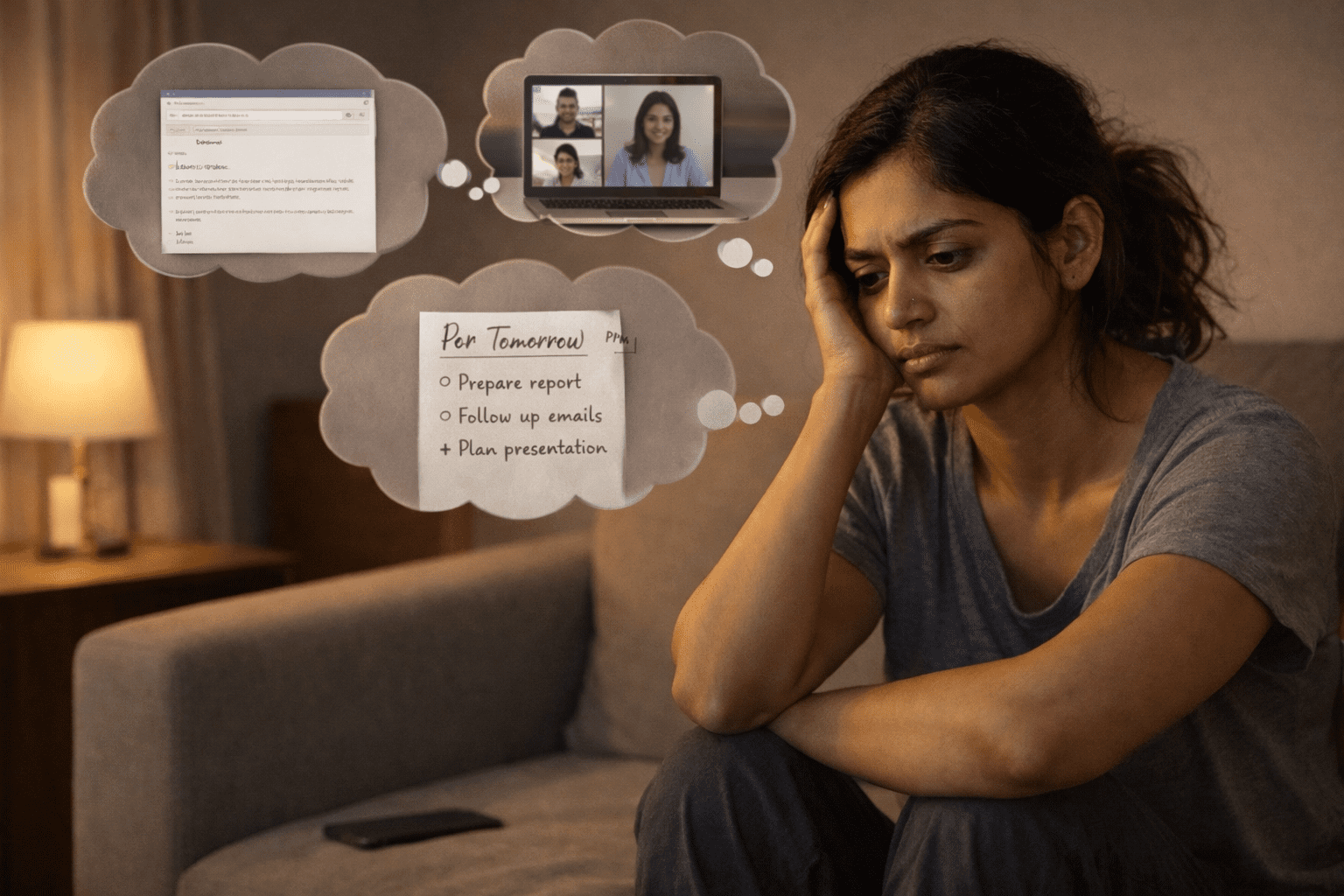 May 6, 2026
Why Can’t I Switch Off My Mind After a Workday?
Learn why your brain stays active after work and how to stop overthinking to recover from burnout. Start your Working...
Read More May 6, 2026
Why Does My Mind Never Stop Thinking?
Struggle with mental exhaustion and overthinking? Learn how to stop racing thoughts and manage work stress with these...
Read More