
Currently Empty: $0
More CoursesAm I Unintentionally Lowering the Self-Worth of My Child?
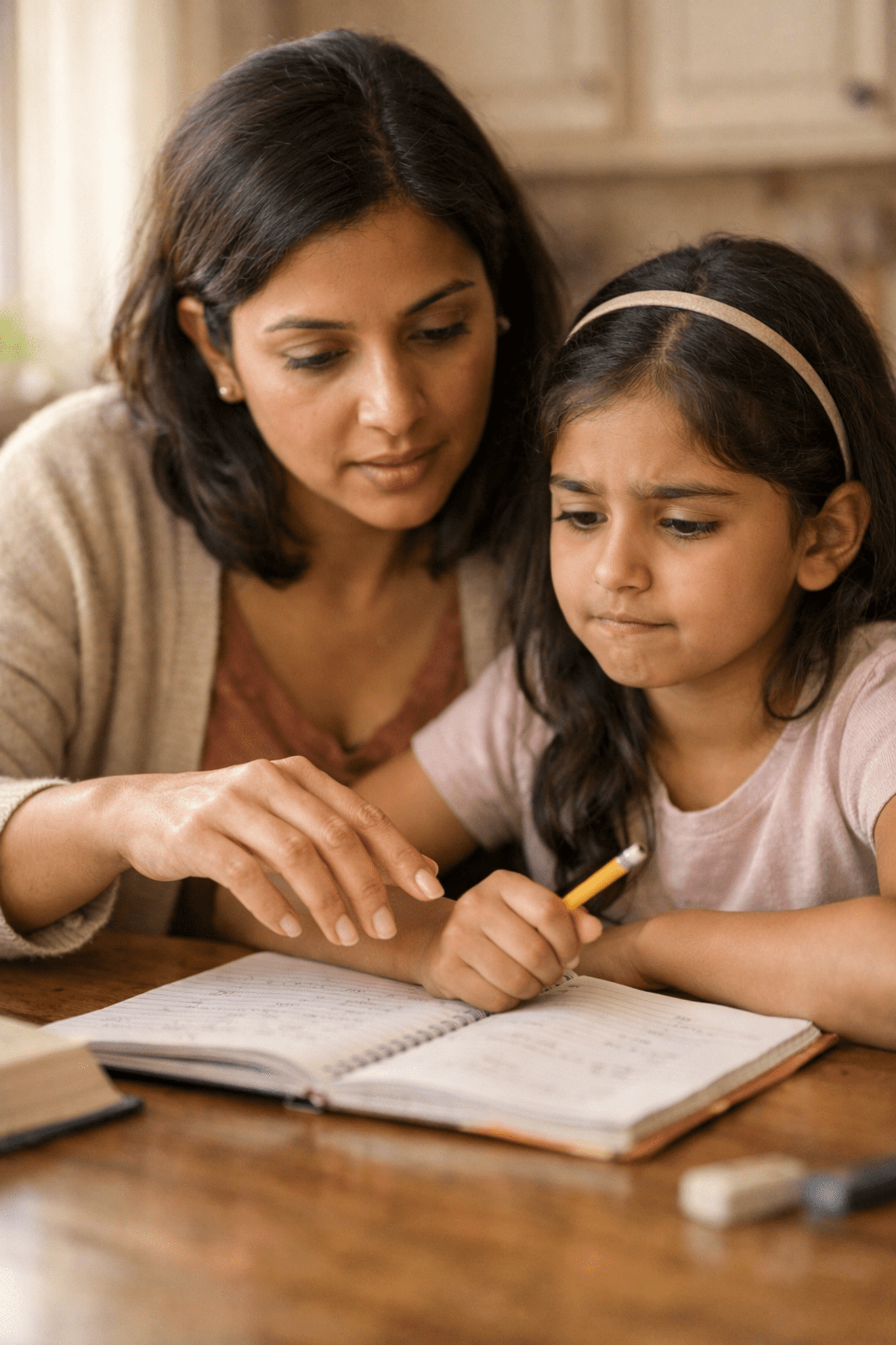
Discover how overprotective parenting impacts child self-esteem and confidence. Learn the signs and how to build resilience instead of removing every obstacle.
Priya sat across from me. She looked so exhausted. Her daughter, Ananya, was in the fourth grade, and something had changed. The child who once raised her hand into the air without thinking to answer now shrank back. Sports Day came with sudden stomachaches. Art competitions were met with a firm, “I don’t want to.”
“I really don’t get it,” Priya said. “I’ve done everything right. I sit with her every night to help with her homework. I make sure she never struggles. I speak to her teachers so she always has support.” She paused, frustration slipping into her voice. “So why does she have no confidence?”
By trying to make things easier for Ananya, Priya had unintentionally made Ananya doubt herself. Every time she stepped in to fix things, Ananya read the same silent message in her mother’s actions: “ You can not handle this by yourself.“
It wasn’t neglect that dimmed Ananya’s confidence. It was love, well-intentioned, constant, hovering love, that never gave her the chance to discover her own strength.
What Is Lawnmower Parenting?
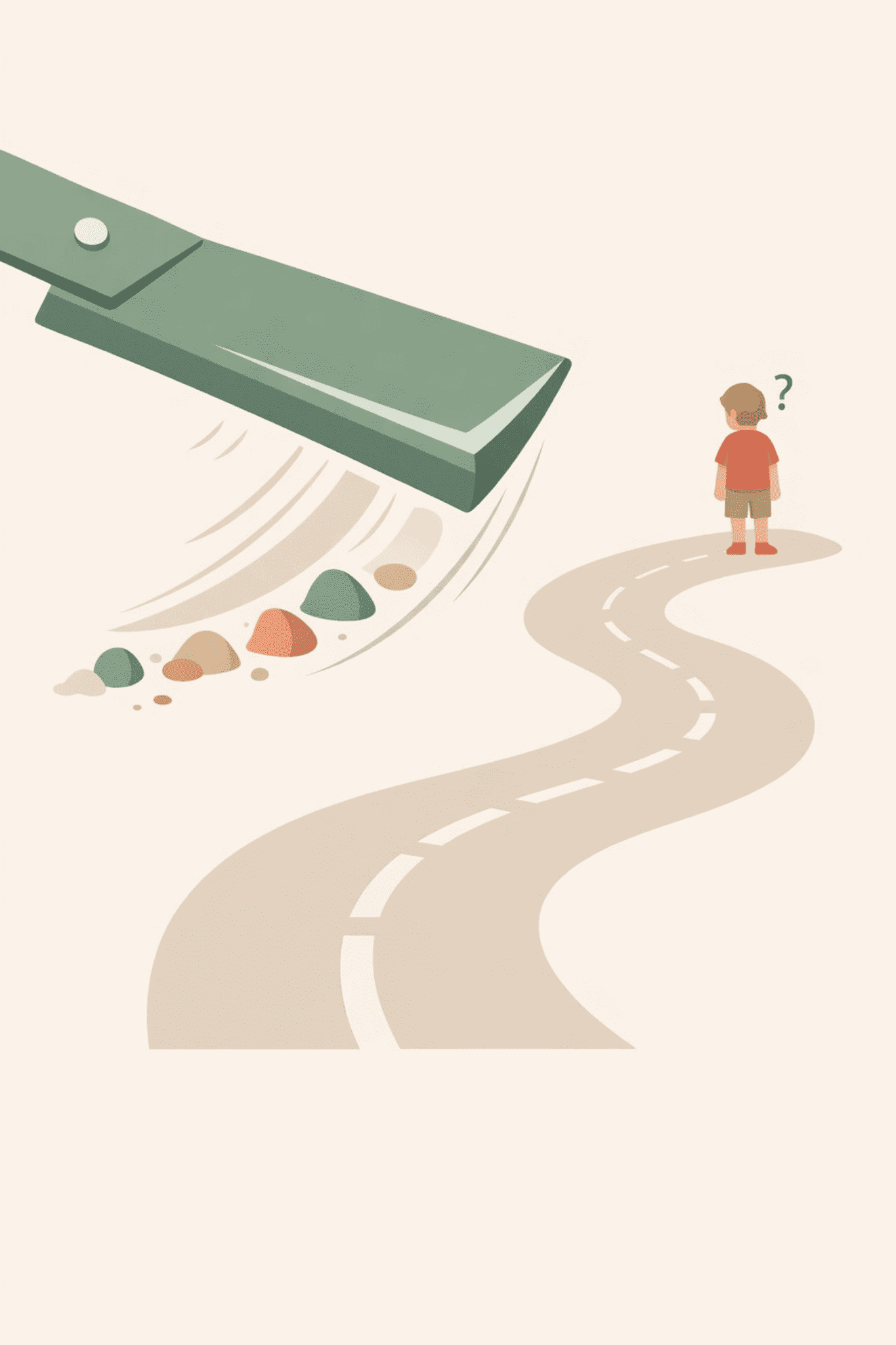
Lawnmower parenting is when a parent rushes ahead of their child, clearing every bump in the road before the child even sees it. Where problems are fixed by the parent for children even before they arise. Discomfort is smoothed away. The path is made so easy that the child never has to trip, pause, or even figure out what to do next.
It comes out of love and protection, but to a child, it often lands like this: “You don’t trust me to handle things on my own.”
Research tells us that when parents step in too often, children slowly stop trusting their own problem-solving abilities and become more anxious and develop lower self-efficacy (Schiffrin et al., 2014). When kids are not given any chance to struggle, fail, and figure things out, they start believing they cannot.
Priya saw herself in this. When Ananya found math difficult, Priya would sit beside her and work out the answers. When there was an issue with a friend, Priya picked up and spoke to her friend’s mother. When Ananya felt scared about a presentation, Priya researched it for her.
All of this taught Ananya one thing: “Mom doesn’t think I can handle it.”
The Unintended Damage to Self-Esteem
By grade 3 or 4, kids start noticing these little things. Who can tie their shoelaces without help? Who finishes a geography model on their own? Who doesn’t need reminders to complete homework? Who speaks up easily in class? When you keep stepping in, fixing things, they may start to feel inadequate compared to others.
They stop trying because failure feels too painful.
They avoid competition because losing feels like proof that they are not good enough.
They quit as soon as something gets difficult because they lack experience overcoming obstacles.
According to the study published in the Journal of Child and Family Studies, children who experience overprotective parenting have higher anxiety and lower self-esteem (Thomasgard & Metz, 1993). Kids need to experience manageable challenges to develop confidence.
That’s what was happening with Ananaya. She avoided competitive situations because she had little experience dealing with uncertainty and failure. After being protected for so long, even the idea of not doing something perfectly felt terrifying to her.

What You Can Do Instead
The good news? You can change this pattern starting today. Here is how:
Let them struggle a little.
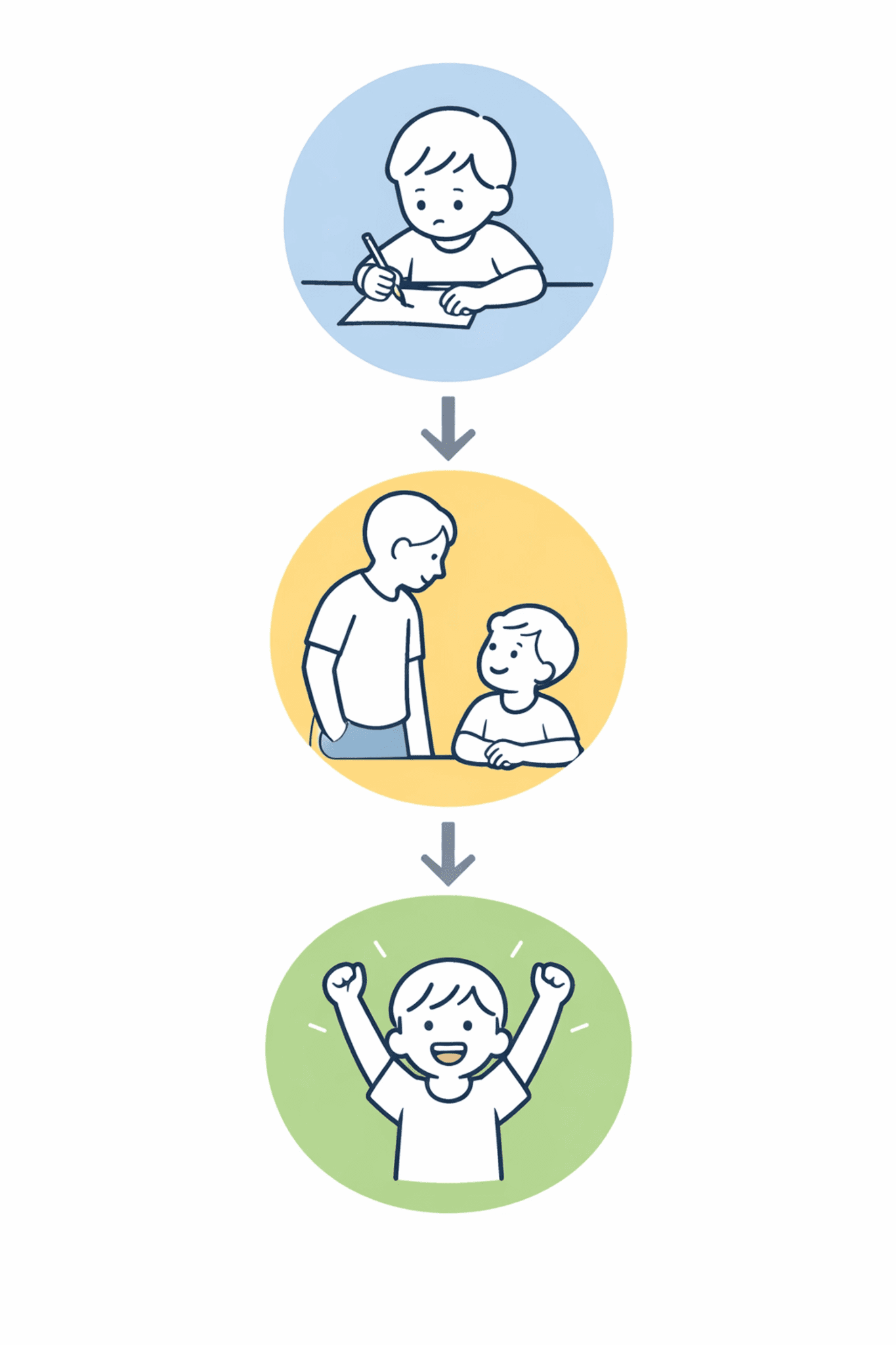
When your child gets frustrated with homework, try not to jump in right away. Instead of fixing it for them, try saying, “ This looks difficult. What do you think you could try next?” Then give them some time to get used to the discomfort. Allow them to solve problems.
Stop fixing every school conflict.
Instead of solving your child’s dispute with a friend, ask them questions. Example: “What would you say to them to make it better?” This way, they can fix the problem themselves and learn that they can have those hard conversations, too.
Celebrate efforts, not just outcomes.
Instead of only celebrating wins, acknowledge the attempt. It is more impactful to say” You tried something exceptionally difficult today” than “ You got an A.” It teaches kids that trying, learning, and pushing themselves is what really counts, not just coming out on top.
Allow natural consequences.
If your child forgets their water bottle, don’t run it to them. Allow them to experience thirst. Next time, they’ll remember. Natural consequences are a lot better way to teach responsibility than lectures.
Rethinking Discipline and Confidence
How we discipline can chip away at a child’s self-worth. If you would like to read more on this subject, visit our blog called How To Discipline Your Child Without Damaging Their Self-Esteem.
Instead of aiming for perfection, aim for resilience, so that your child understands and develops a belief that “ I can get through difficult situations.”
Priya started small. She let Ananya struggle with her spelling words for a few minutes before offering help. She stopped intervening in every playground conflict. She signed Ananya up for a low-stakes drawing class and told her, “You do not have to be the best. You just have to show up and try.”
Within a few months, something shifted. Ananya started raising her hand again. She joined a dance class.
The Takeaway
Parenting has a huge influence on children’s self-confidence and self-esteem. As a parent, it is never too late to reflect on our choices. Give your child some small opportunities for risk-taking and problem-solving, and allow them to be able to get back up again by themselves after falling.
That is how they learn they are capable. That is how they build real confidence.
Start experiencing more authentic transformations in how your child presents themselves in the world today. Our Positive Parenting course will guide you through practical strategies to create resilient and confident children, without feeling guilty.
Come see genuine transformations to your child’s identity in the world by joining us today.
References
Schiffrin, H. H., Liss, M., Miles-McLean, H., Geary, K. A., Erchull, M. J., & Tashner, T. (2014). Helping or hovering? The effects of helicopter parenting on college students’ well-being. Journal of Child and Family Studies, 23(3), 548-557.
Thomasgard, M., & Metz, W. P. (1993). Parental overprotection revisited. Child Psychiatry and Human Development, 24(2), 67-80.
Other Blogs
 May 7, 2026
Why Don’t I Feel Like Myself After Childbirth?
If you feel like you’re losing yourself after having a baby, you’re not broken. A supportive, real-talk guide to matr...
Read More May 7, 2026
Postpartum Anxiety vs. Baby Blues: Understanding Your Emotions After Birth
Feeling more anxious than happy after birth? Learn the difference between baby blues and postpartum anxiety, why slee...
Read More May 7, 2026
Is Productivity Culture Increasing My Stress as a Mom?
Feeling overwhelmed by the pressure to do it all? Learn how hustle culture affects working mothers and discover pract...
Read More May 6, 2026
Why Can’t I Switch Off My Mind After a Workday?
Learn why your brain stays active after work and how to stop overthinking to recover from burnout. Start your Working...
Read More